Uneven texture manifests as changes in the smoothness and relief of the skin. The surface may appear rougher, non-uniform, or feature visible small bumps, enlarged pores, and depressions. These changes are often more noticeable under certain lighting or when applying makeup.
In skin prone to acne, uneven relief can be the result of several factors simultaneously. Comedones and enlarged pores alter the surface of the skin, while deeper inflammatory processes can leave behind scars of varying shapes and depths.
Therefore, when assessing uneven texture, it is important to determine which changes are most significant and whether there is active acne, clogged pores, or already established structural alterations.
What is uneven skin texture?
The term "uneven texture" describes how the surface of the skin looks and feels. It encompasses various changes that can disrupt a smooth and uniform relief.
In some people, texture is characterized primarily by small superficial bumps and comedones. In others, enlarged pores or depressions remaining after acne are more visible. Often, several of these changes are present at the same time.
The underlying cause of the uneven relief matters when choosing an approach. Superficial follicular clogging, more visible pores, and structural scars affect the skin differently and may require different professional methods.
How can uneven texture manifest?
Uneven texture does not look the same in every person. Depending on the cause, small raised bumps, rougher patches, visible pores, depressions, or a rolling relief may be observed.
Superficial changes are frequently associated with clogged follicles and the presence of comedones. Deeper irregularities can be the result of structural changes following inflammatory acne.
During an assessment, both the skin's surface itself and the depth and nature of the individual changes are examined.
What can cause uneven texture?
Various skin conditions and characteristics can contribute to an uneven relief. Within acne-prone skin, the most common factors are comedones, enlarged pores, active inflammation, and post-acne scars.
Enlarged pores and comedones
The buildup of sebum and cells in hair follicles can lead to the formation of open and closed comedones. With numerous closed comedones, the skin's surface can look rougher and more uneven even without pronounced inflammation.
More active sebum secretion and accumulation inside the follicles can make pores more noticeable, which also affects the overall appearance of the texture.
Learn more about enlarged pores and comedones
Acne scars
With deeper inflammation, structural changes can occur that remain after active lesions subside. Atrophic scars create depressions of varying shapes and depths and can make the skin's relief visibly uneven.
When several types of scars are present simultaneously, the texture can have a more complex and non-uniform appearance.
Active acne
Papules, pustules, comedones, and deeper inflammatory lesions also temporarily alter the skin's relief.
In active acne, the initial focus is usually on controlling inflammation and limiting the emergence of new lesions. This is also important for reducing the risk of subsequent structural changes.
Learn more about acne-prone skin
What factors can make texture more visible?
More active sebum secretion and a tendency toward clogged pores can accentuate irregularities on the skin's surface. When numerous comedones are present, the relief often appears rougher and more uneven.
With age, changes occur in the skin's elasticity and supporting structures, which can also affect the visibility of pores and existing irregularities. Accumulated sun damage can further impact skin quality and texture.
Aggressive cleansing, frequent mechanical scrubbing, and squeezing active lesions can cause irritation and increase the risk of subsequent changes.
Can uneven skin texture be improved?
With appropriately selected professional procedures, skin texture can be improved, and the relief can become smoother and more uniform.
The approach depends on the cause of the irregularities. For comedones and more visible pores, the focus may be on controlling sebum secretion and buildup within the follicles. For acne scars, methods aimed at skin renewal and stimulating processes related to collagen production may be discussed.
When several different types of changes are present, different procedures can be combined or applied sequentially.
When is a consultation with a specialist recommended?
A professional evaluation is appropriate when uneven texture is pronounced, when it is combined with active acne, numerous comedones, or scars, as well as when your current home care fails to yield the desired improvement.
A consultation is particularly important in the presence of deeper depressions or other structural changes, as different types of scars and superficial irregularities may require different approaches.
Timely assessment of active acne and early management of established changes help build a consistent plan for improving the condition and relief of the skin.
How is the approach for uneven texture determined?
The first step is to identify which changes are creating the uneven relief.
A specialist evaluates the presence of comedones and enlarged pores, active inflammatory lesions, different types of scars, the depth of structural alterations, and the overall condition of the skin.
When active acne is present, managing it is usually a priority before more intensive work on residual structural changes. When scars or enlarged pores predominate, the approach can be directed straight at the factors creating the uneven relief.
For a combination of several issues, a plan with different procedures performed in an appropriate sequence can be developed.
Consultation at DERMA ART
If your skin texture is uneven and you are unsure which changes are behind it or what approach is suitable for them, you can take the first step in a way that is convenient for you.
Use the virtual consultation to explore procedures tailored to your primary goals and preferences, or book an appointment at DERMA ART if you would like an individual skin assessment and recommendations from a specialist.
Suitable procedures for uneven texture
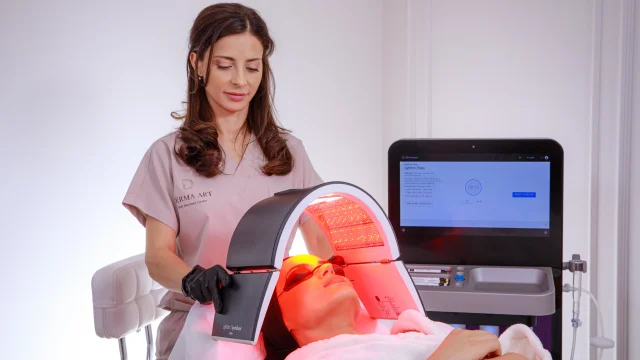
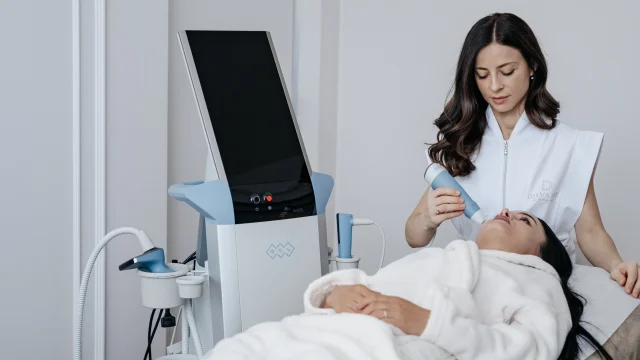
Professional procedures are selected according to the cause of the uneven relief, the depth of the alterations, the presence of enlarged pores, comedones, or scars, and the current condition of the skin.
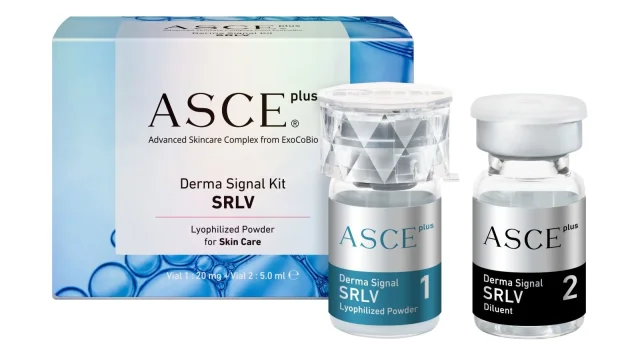
Depending on the specific concern, methods aimed at skin renewal, improving relief, stimulating collagen processes, and reducing the visibility of pores and structural irregularities may be discussed.
For combined changes, a sequence of different procedures may be appropriate. The specific plan is determined individually following an assessment by a specialist.
The information on this page is for informational purposes and does not replace an individual examination, diagnosis, and recommendations from a physician.